What more do you need to see?
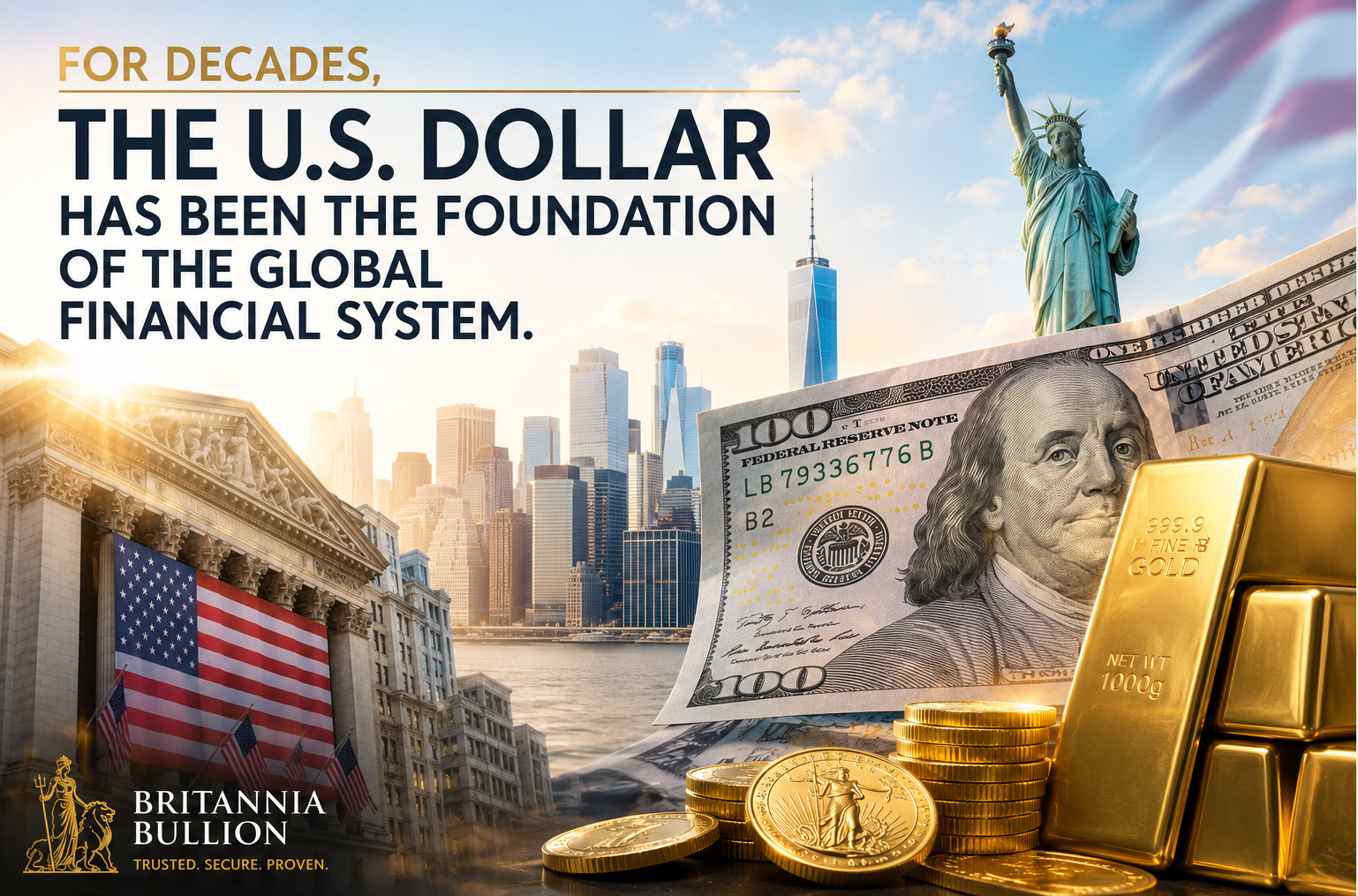
For decades, the U.S. dollar has been the foundation of the global financial system.
Countries accumulated U.S. Treasuries because they were considered one of the safest assets in the world. They offered liquidity, stability and confidence.
But something has changed.
Quietly, consistently and with very little mainstream attention, China has been reducing its exposure to U.S. government debt while steadily increasing its gold reserves.
That isn't an opinion. It's happening.
Watch this Video! -https://www.youtube.com/watch?v=CNg5U-ijEZA&t=440s
The chart tells the story.
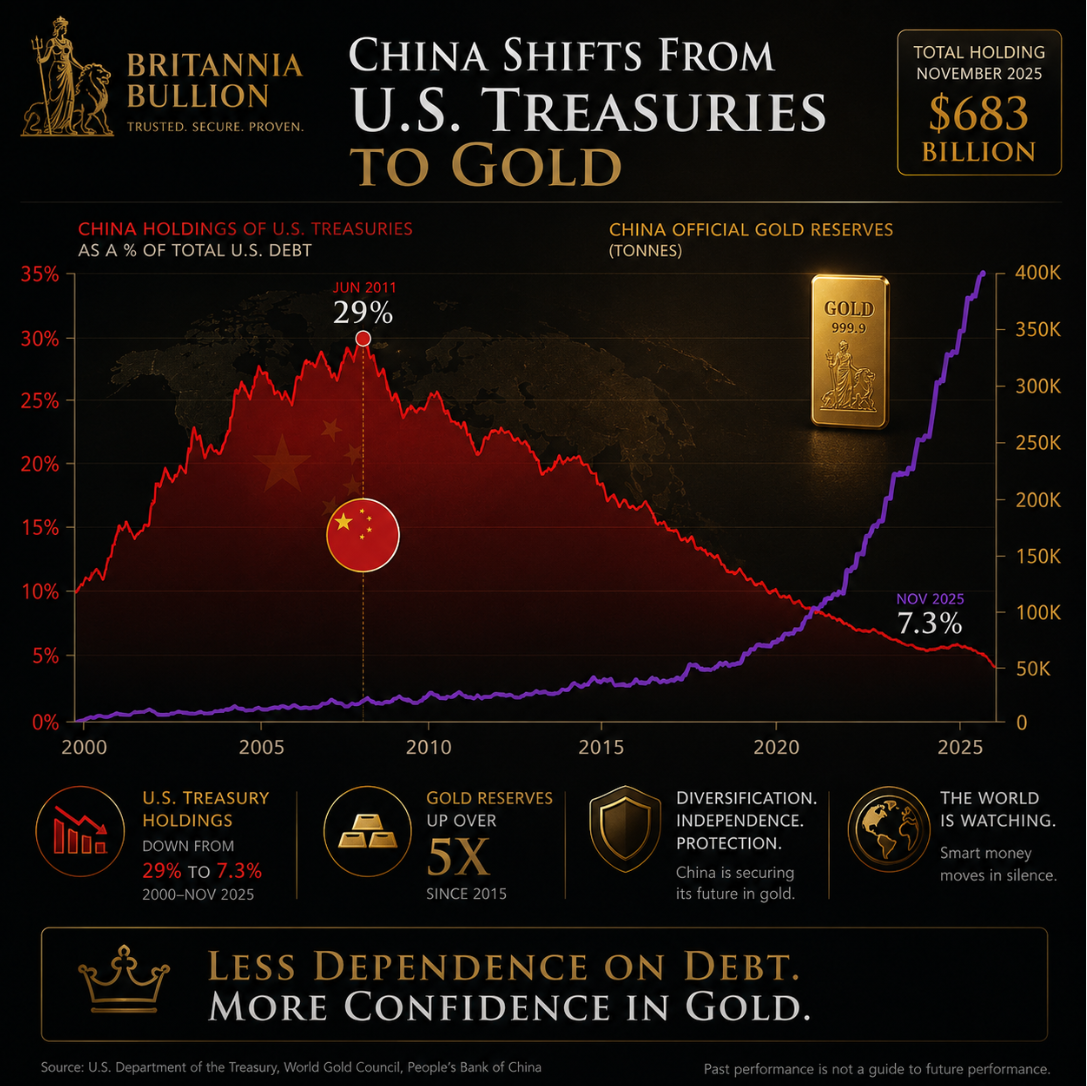
China's holdings of U.S. Treasuries have fallen dramatically from around 29% in 2011 to approximately 7.3% by late 2025, while its official gold reserves have continued to climb. This trend reflects a broader effort to diversify reserves rather than rely so heavily on dollar-denominated assets.
This isn't a trade. It's a strategic shift.
Governments don't think in months. They think in decades.
When one of the world's largest economies changes the composition of its reserves, it deserves attention.
Central banks don't buy gold because it's fashionable.
They buy it because it has survived every currency, every financial crisis and every monetary experiment in modern history.
Gold has no counterparty risk.
It cannot be printed.
It cannot be created with the click of a button.
It has protected wealth for thousands of years.
The question isn't what China is doing.
The real question is...
Why?
Why would one of the world's largest holders of U.S. debt steadily reduce that position?
Why are central banks around the world buying hundreds of tonnes of gold every year?
Why are they choosing a metal that pays no interest over government debt?
The answer may be simpler than many people think.
Confidence.
When confidence in paper assets weakens, confidence in tangible assets grows.
Gold has always been the financial insurance policy of nations.
So ask yourself this.
If governments are reducing exposure to paper promises...
If central banks continue accumulating physical gold...
If institutions are preparing for uncertainty...
What are you doing with your savings?
Leaving everything in cash may feel safe.
But history has shown that inflation quietly erodes purchasing power over time.
Gold isn't about predicting the future.
It's about preparing for it.
Smart money often moves first.
By the time headlines tell everyone to buy gold, much of the opportunity has already passed.
The people responsible for protecting national wealth are already making their decisions.
Perhaps the better question isn't whether they are buying gold.
It's why so many private investors still aren't.
Sources
- U.S. Department of the Treasury – Foreign holdings of Treasury securities.
- World Gold Council – Central bank gold reserve data and annual reserve reports.
- People's Bank of China – Official gold reserve disclosures.
Past performance is not a guide to future performance. The value of gold and precious metals can fall as well as rise, and you may get back less than you invest.
Closing thought
If the institutions that issue and manage fiat currencies are increasing their exposure to gold, it's worth asking whether your own portfolio has any exposure at all.
.svg)