There was a moment in the early 1970s when the global financial system quietly changed forever.
The United States had just severed the dollar’s link to gold. The world’s reserve currency was no longer backed by anything tangible, and confidence was fragile.
So a new foundation had to be built.
The Deal
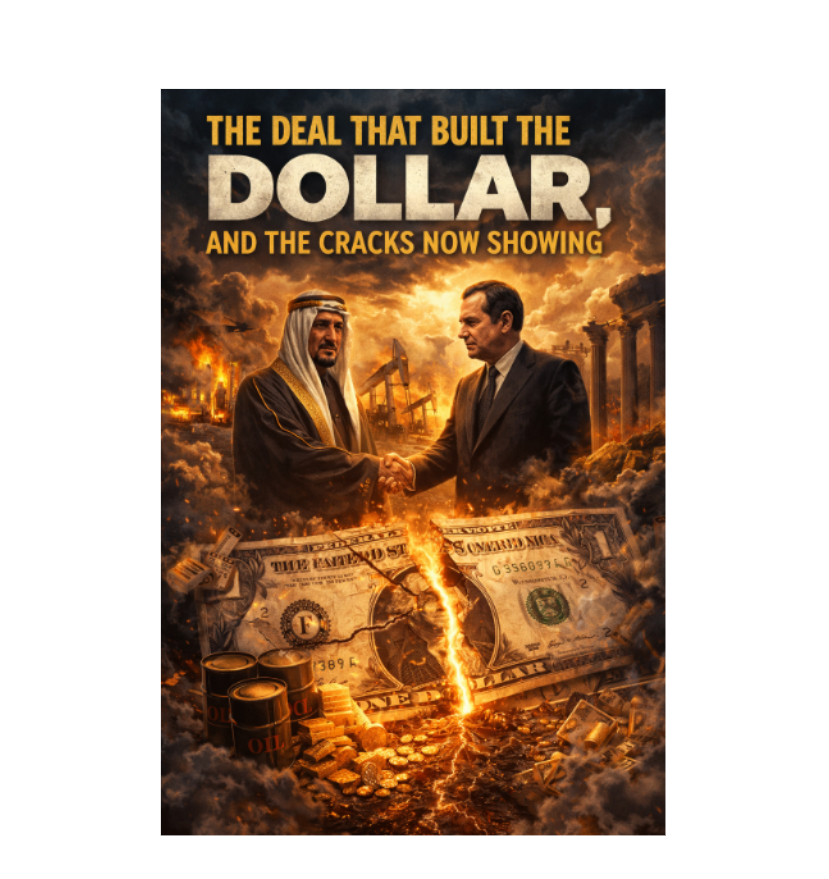
In 1974, under the guidance of Henry Kissinger, the United States struck a strategic agreement with Saudi Arabia, and, by extension, the wider oil-producing world.
The terms were simple, but powerful:
- Oil would be priced and traded exclusively in US dollars
- Surplus oil revenues would be recycled back into US financial markets
In return:
- The United States would provide military protection and security guarantees
- A long-term strategic partnership would be established across the region
Why It Mattered
This wasn’t just an energy agreement.
It created something far bigger, what became known as the petrodollar system.
From that point on:
- Every country that needed oil… needed dollars
- Every nation had to hold US currency reserves
- Oil exporters reinvested their profits into US debt and assets
The result?
The dollar became the centre of the global financial system, not because it was backed by gold, but because it was backed by oil.
The System at Its Peak
For decades, the model held.
- The US projected military strength across the Middle East
- Energy flows remained relatively stable
- The dollar remained dominant
It was a self-reinforcing cycle:
Oil created demand for dollars.
Dollars funded US power.
US power protected the system.
But Systems Don’t Break Overnight, They Erode
Today, the foundations of that system are no longer as solid as they once were.
Not collapsed. Not broken. But changing.
Quietly, steadily, and in ways that matter.
The Cracks Beginning to Show
Across the world, we are seeing early signs of a shift:
- Energy trade diversification
Oil is increasingly being discussed and, in some cases, settled in currencies other than the dollar - New alliances forming
Closer ties between major producers and emerging powers are reshaping the landscape - Central banks voting with action
Gold purchases by central banks have surged to levels not seen in decades - Confidence becoming more selective
The assumption that the dollar must always sit at the centre is no longer unquestioned
Why This Matters More Than It Seems
The petrodollar system doesn’t need to collapse to have consequences.
It simply needs to weaken.
If even a portion of global oil trade begins to move away from the dollar:
- Structural demand for dollars declines
- Pressure on US borrowing increases
- Currency stability becomes less certain
And once that process begins, it tends not to reverse, it accelerates.
Where Gold Fits In
Gold has always played a unique role in moments like this.
It doesn’t rely on:
- Governments
- Promises
- Or financial systems holding together
It simply reflects trust, or the lack of it.
And right now, that signal is becoming clearer:
Gold isn’t reacting to a crisis.
It’s responding to a system that is beginning to shift beneath the surface.
The Bigger Picture
This isn’t about predicting collapse.
It’s about recognising change.
The deal that helped build the modern dollar system still exists, but its dominance is no longer absolute.
And history shows that when monetary systems begin to evolve, the move into hard assets doesn’t happen at the end…
It happens at the beginning.
A Final Thought
The dollar was once backed by gold.
Then it was backed by oil.The question today is simple:
What is it backed by now?
Britannia Bullion
Helping you protect and position your wealth with physical gold , simply, securely, and with clarity.