There was a time when war meant tanks, ships, and boots on the ground.
Then it evolved, missiles, drones, cyber attacks.
Now, we’ve crossed another line.
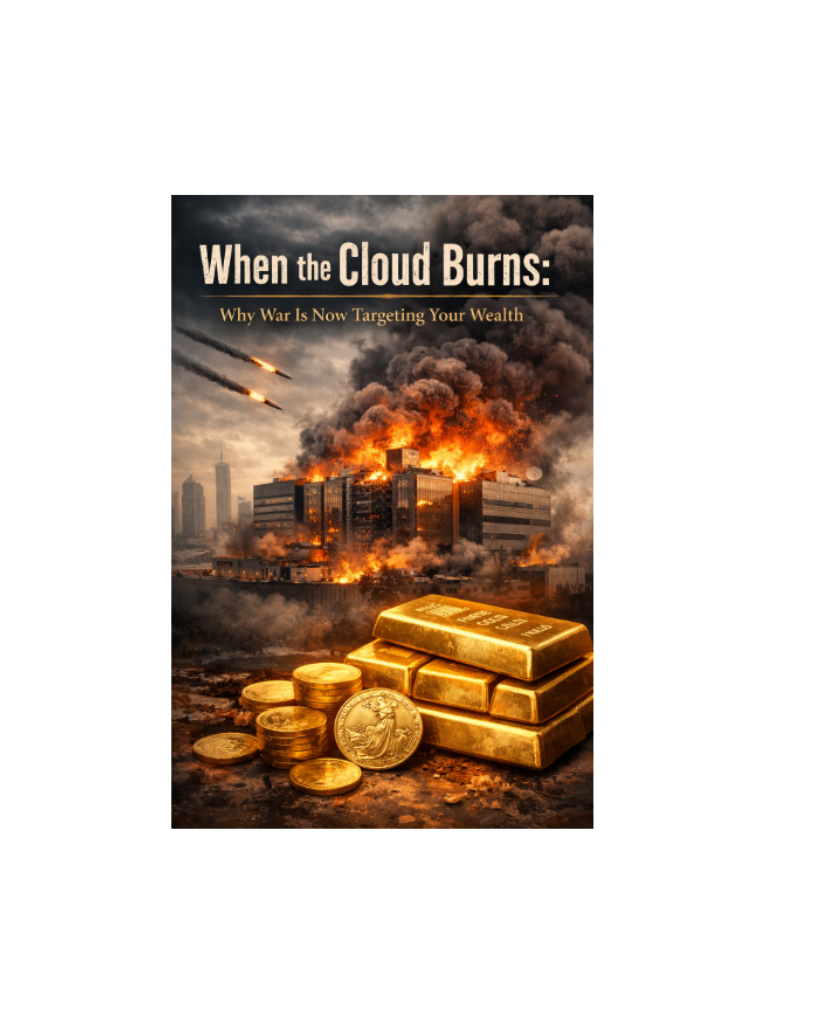
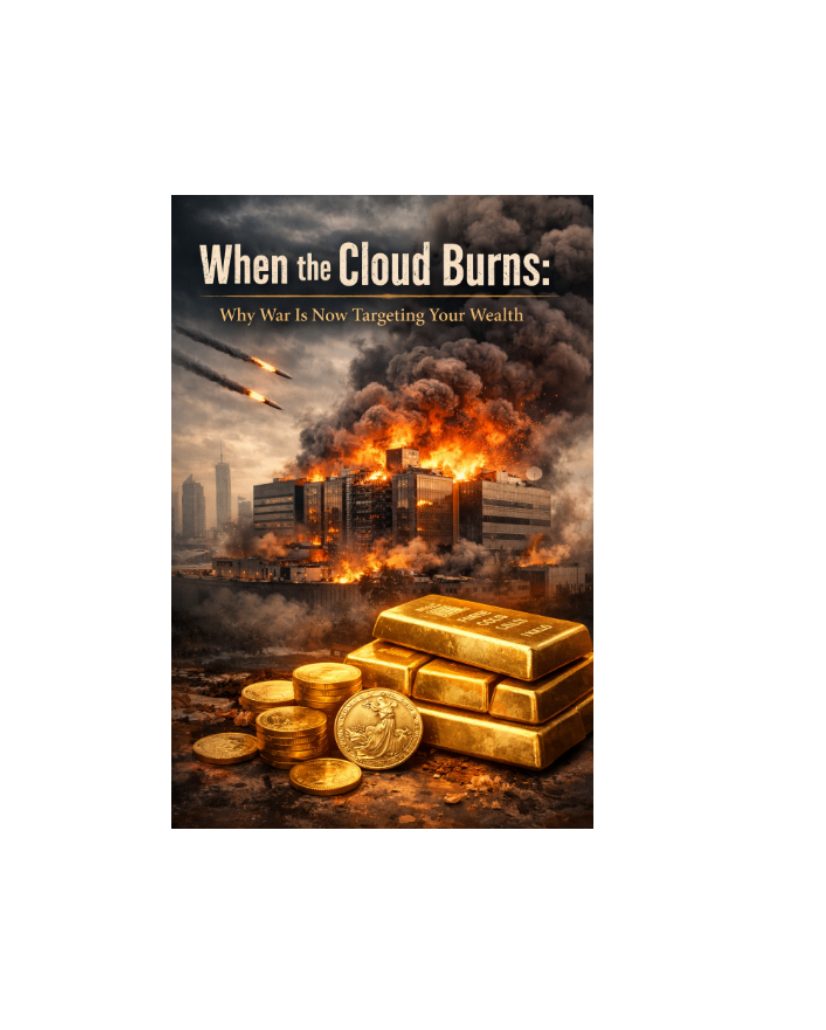
This week, data centres, the very backbone of modern wealth, have become targets.
And most people haven’t yet grasped what that really means.
The Illusion of Safety
For years, we’ve been told our wealth is “safe” because it’s digital.
- Your savings sit in a bank account
- Your investments live on platforms
- Your pension exists as numbers on a screen
It all feels secure because it’s in the cloud.
But here’s the uncomfortable truth:
The cloud isn’t a place. It’s a building.
A building with servers.
Power supplies.
Cooling systems.
Cables.
And now, increasingly, a target.
From Oil Fields to Data Fields
Historically, conflicts in the Middle East have focused on oil.
Why? Because oil powers the global economy.
But today...
Data powers the global economy just as much, if not more.
Financial transactions, banking systems, communications, AI infrastructure, all of it runs through physical data centres.
So when those are hit, it’s not just a local incident.
It’s a systemic threat.
A New Kind of Shock
When a missile hits an oil refinery, the impact is obvious:
- Oil prices spike
- Inflation follows
- Markets react
But when a data centre is hit?
The consequences are more subtle, and potentially more dangerous:
- Payment systems can fail
- Trading platforms can freeze
- Communications can go dark
- Financial access can be interrupted
And crucially:
You may not be able to access what you thought you owned.
The Fragility of Digital Wealth
We’ve built a financial system based on accessibility.
Apps. Logins. Portals.
But accessibility depends on infrastructure.
And infrastructure can fail, or be targeted.
Ask yourself:
- What happens if your platform goes offline?
- What if your bank restricts access “temporarily”?
- What if systems are disrupted during a wider geopolitical event?
In calm times, these questions feel extreme.
In times like these, they feel… prudent.
Gold Doesn’t Need a Server
Physical gold operates outside of this system.
- It doesn’t rely on electricity
- It doesn’t require internet access
- It isn’t stored on a server
- It can’t be hacked or digitally erased
It simply exists.
And that’s precisely why it has endured for thousands of years.
Gold isn’t an investment in the traditional sense, it’s a form of financial independence.
A Shift Most Haven’t Seen Yet
Markets haven’t fully priced this in.
Most investors are still thinking in old frameworks:
- Interest rates
- Inflation prints
- Equity valuations
But beneath the surface, something more fundamental is changing:
The battleground is shifting from physical resources… to digital infrastructure.
And that has profound implications for how, and where, wealth should be held.
The Real Question
This isn’t about fear.
It’s about perspective.
In a world where:
- Banks can restrict access
- Markets can close
- Platforms can go offline
- And now, even data centres can be targeted
You have to ask:
Do you own your wealth… or do you merely have access to it?
Final Thought
We’ve spent decades moving wealth into digital systems because they were convenient.
But convenience is not the same as security.
And moments like this remind us of a simple truth:
When everything else depends on systems… the most valuable assets are the ones that don’t.
A Practical Step
At Britannia Bullion, we help clients take a simple, measured step toward greater financial resilience.
Through:
- Physical gold ownership (primarily UK legal-tender coins, typically CGT-free for UK residents)
- Insured next-day delivery on in-stock certified coins
- Or fully allocated storage in your name
- With a clear, straightforward sell-back process
No hype. No complexity. Just real assets, held properly.
Because when the cloud burns…
You’ll want something that doesn’t.